

Eric Karjaluoto
I’m one of the two people working on Campnab. I like to run, ski, bike, and camp with my family and friends. (I love saunas.)
Find me:


Campgrounds really are scarce—but reservation rules, constrained supply, cancellations, and changing plans make “sold out” much more complicated than it appears.
A campsite can appear sold out months ahead, become available again later, disappear minutes after that, and then somehow look empty when a camper walks past it in July.
Part of the confusion is that reservation systems use some version of “unavailable” to describe very different situations. A campground may genuinely have more people pursuing it than sites available. The only remaining sites may be incompatible with someone’s RV or accessibility needs. Open nights may be scattered across several campsites instead of forming one usable stay. A site might be temporarily held in another customer’s cart. Or a reservation that looks permanent today may be cancelled months from now.
For nearly a decade, I’ve helped operate Campnab, a service that monitors campground reservation systems across Canada and the United States and notifies campers when sites become available. That work has given me a slightly unusual view of the campsite shortage. I’ve watched popular parks fill almost immediately, then watched openings continue to surface through the weeks and months that follow.
Over the years, journalists have repeatedly asked me some version of the same question: Why has it become so difficult to reserve a campsite?
There is no shortage of possible explanations. Camping has become too popular. Governments have failed to build enough campgrounds. Bots are taking everything. People are hoarding reservations. Social media sends everyone to the same photogenic places. Larger RVs reduce the portion of older campground inventory that some travellers can use.
Each explanation contains some truth, but none adequately describes the problem on its own.
What campers experience as one problem of “everything is sold out” is better understood as three related ones. The first is scarcity, because more people want certain campsites than parks can provide. The second is allocation, because rules determine who gets those scarce sites. The third is utilization, because a campsite that has been reserved is not necessarily occupied for every night of that reservation.
Those distinctions matter because the solutions are different. Building another campground can increase supply, but it does not make the booking process fairer. Changing a reservation window can alter who gets access, but it does not create a single physical campsite. Stronger cancellation rules can reduce unused nights, but they cannot accommodate 5,000 people competing for 500 sites.
The campsite shortage is real. It is simply more complicated and more fluid than the term “sold out” suggests.
Not enough of the right campsites
The most obvious part of the problem is that a lot of people want to camp.
An industry survey from Kampgrounds of America reported that more than 52 million North American households camped in 2025, a level still above pre-pandemic participation. The exact numbers vary depending on how camping and participation are defined, but the broader pattern is clear: camping did not simply retreat to its pre-2020 baseline after other forms of travel reopened.
The difficulty is not merely the number of campers. It is that demand is extraordinarily concentrated.
In Canada and much of the northern United States, the most desirable camping season is relatively short. Families with school-aged children are concentrated into July and August. Many people can travel only on weekends or holidays. Campers generally prefer warm evenings, open roads, long daylight hours, and reasonably predictable weather. Those preferences converge on a surprisingly small number of nights.
A large historical analysis by Resources for the Future examined approximately 1.5 million national-park campsite reservations made through Recreation.gov between 2014 and 2016. The researchers found that reservable campgrounds in most of the parks they studied filled during peak summer. Parks near large populations often reached capacity on spring and fall weekends as well. Most camping stays lasted only a couple of nights, and most trips originated within several hundred miles of home.
The study is now a decade old, so it should not be treated as a snapshot of camper behaviour in 2026. More recent evidence suggests that the basic concentration problem persists. Ontario Parks says more than half of the reservations it receives between January and March are for just five of its busiest parks. Its reservation system opens at 7 a.m., five months before arrival, and the agency warns that dozens of customers can be competing for the same site and date at exactly that moment.
This is why annual campsite counts can be misleading. A campground might have substantial unused capacity across an entire year while remaining virtually unobtainable for the six or eight weekends when most people want to visit. A vacant Wednesday in October is not an adequate substitute for a household that can travel only during the first weekend after school ends.
Geography concentrates demand further. People will usually travel much farther for a week-long vacation than for two nights, putting enormous pressure on campgrounds within a practical weekend radius of cities such as Vancouver, Toronto, Seattle, Denver, or San Francisco. Within that radius, campers also gravitate toward the same waterfront sites, famous parks, scenic mountain destinations, and well-known campgrounds. When the first choice fills, demand tends to cascade into the same small collection of alternatives.
Social media can intensify this concentration, particularly when a lesser-known destination suddenly receives widespread attention, but there is little evidence that it explains the broader North American shortage. Yosemite, Banff, and the Pacific coast were heavily sought-after long before Instagram existed.
There may still be campsites somewhere in a province or state. They may simply be six hours farther away, available Tuesday instead of Saturday, or nowhere near the place the camper hoped to visit.
A campsite isn’t one interchangeable unit
Even counting physical campsites understates the problem, because campsites are not interchangeable.
Someone travelling with a small tent can use a much wider range of sites than a person towing a 30-foot trailer. Campground roads need adequate width and turning clearance, while parking pads must be sufficiently long and level. Trees, slopes, overhead branches, and equipment restrictions narrow the usable inventory further.
Amenities divide it again. Electrical hookups, pull-through sites, potable water, showers, flush toilets, dump stations, waterfront locations, shade, and privacy are not uniformly distributed. Ontario Parks explicitly notes that electrical sites and campsites capable of accommodating large RVs are among its most popular inventory.
Some requirements are preferences; others are necessities. A camper with a disability may need an accessible parking surface and nearby facilities. Older campers, families with young children, and people carrying substantial equipment may need vehicle access. A backcountry tent pad is not an equivalent substitute for someone travelling in an RV.
This creates an important difference between total capacity and usable capacity. A campground might contain open sites yet have nothing compatible with a particular camper’s equipment, accessibility needs, dates, or party size.
Ontario Parks addresses this problem directly when explaining why supposedly full parks can contain visibly empty sites. Its reservation search considers dates, length of stay, party size, equipment type, electrical service, pull-through access, accessibility, shade, and other filters. A campsite can therefore be physically vacant and still never have appeared in a particular camper’s search.
Reservation systems compress all of this complexity into a binary result: available or unavailable.
Why not just build more?
If a commercial product repeatedly sells out, the conventional response is to make more of it. Parks do not operate under conventional commercial conditions.
A developed campsite requires considerably more than a flat area and a picnic table. A campground may need roads, parking pads, drainage, toilets, potable-water systems, wastewater handling, garbage collection, signage, fire protection, and emergency access. Once constructed, those facilities must be cleaned, staffed, inspected, repaired, and eventually replaced. Every new campsite therefore creates both a construction cost and a continuing operating commitment.
That becomes more significant when park agencies are already struggling to maintain what they have. In the United States, the Government Accountability Office found that reported deferred maintenance increased between 2019 and 2022 across all five federal land agencies eligible for the Legacy Restoration Fund. The backlog included campgrounds, roads, buildings, and other public-land infrastructure. Even a federal fund authorized to provide as much as $1.9 billion annually encountered rising construction costs, inflation, and other obstacles.
The decision is therefore not always between building another campground and doing nothing. It might instead be between adding 50 sites and repairing an existing water system, rehabilitating an unsafe road, fixing washrooms, replacing a bridge, or reopening a campground loop that has already fallen out of service.
Park agencies also have mandates that extend far beyond getting more people outdoors.
Parks Canada describes maintaining or improving ecological integrity as its first priority in national parks. Its current planning documents include ecosystem restoration, climate adaptation, species protection, invasive-species management, and Indigenous stewardship alongside visitor enjoyment.
The United States built a similar tension into the National Park Service from the beginning. The 1916 Organic Act directs the agency to conserve scenery, wildlife, and natural and historic resources while providing for their enjoyment in a way that leaves them “unimpaired for the enjoyment of future generations.”
Neither system exists simply to maximize the number of nights available for booking. A campground can concentrate human impacts in one area, which may be preferable to unrestricted use, but campsites still compact soil, remove vegetation, disturb wildlife, create waste, require roads, and put pressure on water, shorelines, and surrounding trails. At some point, adding more capacity begins to alter the place people came to experience.
From the perspective of someone who cannot obtain a reservation, undeveloped land inside a park can look like unused capacity. From a conservation perspective, the absence of roads, toilets, parking pads, and overnight visitors may be precisely what protects it.
The campground that wasn’t built
Cape Roger Curtis, on Bowen Island near Vancouver, offers a useful example of how complicated new campground supply becomes once it leaves the drawing board.
Metro Vancouver purchased a 97-hectare waterfront property and proposed a regional park incorporating ecological protection, habitat restoration, trails, shoreline access, day use, and supervised overnight camping. From a regional perspective, the proposal had obvious appeal: it could have created new public camping close to a major metropolitan area, potentially accessible by ferry, shuttle, bicycle, and foot.
But overnight camping became deeply controversial locally. Residents and municipal submissions raised concerns about wildfire evacuation, water supply, traffic, infrastructure, and the impact of overnight visitors. Because camping required changes to local land-use regulations, Bowen Island Municipality had considerable leverage over whether the proposal could proceed.
In 2024, following what the municipality described as “resounding public feedback” regarding overnight camping and the regional-park proposal, Metro Vancouver sold 65 hectares to the Bowen Island Conservancy. The land would be protected, but the campground would not be built.
It is easy to dismiss opposition like this as NIMBYism, but that misses the more interesting problem. The benefits of a new campground can be spread among hundreds of thousands of regional residents, while traffic, emergency risk, noise, and infrastructure pressure are concentrated in one small community. Some objections may primarily reflect local interests; others may involve legitimate safety or infrastructure constraints. Often, those motivations are difficult to separate.
The same conflict exists in the United States. A proposal near Mariposa, California, would create a 400-site KOA RV resort, tent sites, and a separate glamping resort near Yosemite. County documents show the project would require its own wells, water-storage systems, wastewater treatment, roads, and fire-suppression infrastructure. Residents have opposed the project over wildfire evacuation, water availability, traffic, emergency capacity, and ecological impacts in an area repeatedly affected by fire.
These examples do not prove that such projects should be stopped. They demonstrate why “build more campsites” is an objective rather than a simple instruction. New campground supply can require land acquisition, ecological and cultural review, Indigenous or Tribal consultation, rezoning, roads, water, sewage, emergency planning, capital funding, and a permanent operating budget.
Who gets the sites?
Once demand exceeds supply, the question changes. If 5,000 people want 500 campsites, even a flawless reservation system must disappoint 4,500 of them. At that point, the booking system is no longer solving scarcity. It is deciding how to allocate it.
No method is neutral. A precise release time favours people who can be online at exactly the right moment, understand the system, have dependable internet, and complete a transaction quickly. Ontario Parks advises customers trying for popular sites to prepare their devices beforehand and wait until exactly 7:00:00 a.m. to begin. It says heavy traffic is common and that dozens of people can be pursuing the same campsite and arrival date.
A lottery removes some advantage from technically skilled users but replaces it with luck. A first-come, first-served campground favours people who live nearby, can arrive midweek, or have schedules flexible enough to wait. Higher prices favour purchasing power. A longer advance-booking window helps travellers planning complicated trips but asks everyone to predict their work, health, finances, and family commitments further into the future.
Booking windows illustrate the trade-off. Ontario opens reservations five months ahead. BC Parks uses a different window. Recreation.gov release periods vary among individual federal facilities. A longer period provides time to book vacation, ferries, flights, and multi-stop trips, but it also creates more time for circumstances to change before arrival.
There is no universally correct booking window because different campers need different things from it.
Sometimes the rules create their own scarcity
Reservation rules can also fragment otherwise usable inventory.
A campground might have one site available Thursday, another Friday, and another Saturday, yet a search for all three nights returns nothing because no single site is open throughout the trip. Minimum-stay requirements can strand isolated nights. Search filters can remove potentially workable sites. Temporary cart holds can make inventory appear unavailable even if the transaction is never completed.
Rolling booking windows can create their own peculiarities. Depending on the system, someone whose trip begins earlier may be able to reserve subsequent nights before those nights become available to a camper hoping to arrive later. Rules intended to prevent people from gaming this process can, in turn, make legitimate trip changes more difficult.
Again, the reservation interface tends to flatten all of these situations into the same result: unavailable.
Why not just charge more?
In an ordinary market, persistent excess demand normally produces higher prices. A hotel that sells every room instantly can raise its rates until fewer people are willing to book.
Public campsites generally do not operate this way, and there are good reasons for that. Parks are public resources intended to remain accessible across a range of incomes. Maximizing revenue is not their only purpose.
A highly desirable campsite may therefore cost a fraction of a nearby hotel room even when thousands of people would happily pay more for it. Low prices may also make uncertain reservations less costly to hold, although public data does not establish how widespread speculative or duplicate booking actually is.
The historical Resources for the Future analysis analysis found many bookings being made as soon as inventory became available and substantial cancellation and rebooking activity closer to arrival. Its authors suggested that relatively modest cancellation penalties might contribute, while also recognizing that pricing and penalty changes raise questions of equity.
Different agencies have reached different answers. Recreation.gov charges fees for campsite cancellations and may retain additional use fees for late cancellations. California State Parks adopted significantly tougher rules for stays beginning July 1, 2026: cancelling within 48 hours or failing to arrive can mean forfeiting all fees, while three no-shows in a calendar year can result in a one-year reservation restriction.
Higher prices and stronger penalties may reduce some forms of excess demand, but they can also make public camping less accessible or penalize someone whose plans changed because of illness, wildfire, dangerous weather, or a family emergency. Keeping campsites affordable contributes to oversubscription, but that is partly a consequence of choosing not to allocate public nature solely according to willingness to pay.
What about bots?
Any discussion of campsite scarcity eventually arrives at bots. Campers see sites disappear in seconds and reasonably wonder whether software is buying everything.
Automated booking attempts may occur, and booking providers should detect and prevent them. Speed itself, however, proves very little. If dozens or hundreds of people request the same site at the same moment, humans can make an opening disappear almost instantly.
Normal behaviour can resemble automation from outside the system. Customers may have saved account information and payment details. Several people in one household may try for the same trip. A campsite can disappear when it enters another user’s cart even though the purchase is never completed.
BC Parks has publicly said its provider uses security measures intended to prevent automated reservations and maintains that extreme demand, rather than bots, explains most opening-morning failures. That is useful evidence of one agency’s position, but it does not establish how much automation is attempted, or succeeds, across every North American reservation system.
It is also worth distinguishing between technologies. Software that automatically completes a reservation participates directly in the allocation contest. A cancellation-alert service identifies inventory that has become available and tells a camper, who still books through the official system. These tools may both help users respond more quickly, but they do fundamentally different things.
Even perfect bot prevention would solve a fairness problem, not a supply problem. Five thousand humans competing fairly for 500 sites still leaves 4,500 without one.
Where do the reservations go?
The strangest part of campsite scarcity comes later, when someone who could not find a reservation walks through a supposedly full campground and sees vacant sites.
This looks like direct evidence that the system is broken. Sometimes it is evidence of wasted inventory. But not every empty-looking site is actually available.
Ontario Parks says this complaint is common enough that it published an explanation specifically addressing it. A vacant site may not have matched the camper’s search criteria. Its occupants may not have arrived yet. The reservation may cover only part of someone else’s stay. The site might be closed for wildlife, rehabilitation, flooding, storm damage, invasive species, or a hazardous tree. Last-minute cancellations can also leave a site genuinely unused.
This exposes a surprisingly important distinction: reservation systems measure allocation better than they measure occupancy.
Recreation.gov makes this unusually explicit. Its reservation policy says that no-shows may not be recorded at unstaffed locations and that reservations at those locations can simply be treated as checked in. Individual federal campground listings explain that no-shows are recorded only at staffed facilities and recommend holding a reserved site until checkout time on the day after scheduled arrival.
In other words, the database may know that someone has the right to use a campsite without knowing whether that person is actually sleeping there. That matters when people point to empty sites as evidence of widespread reservation abuse: the site might genuinely be unused, or it may belong to a late arrival, a camper who has driven away for the day, or someone whose equipment is not visible from the road.
Sold out today doesn’t mean sold out all summer
Months can pass between booking and arrival. People get sick. Work and family plans change. Wildfires start. Smoke arrives. Roads close. Rain moves in. Vehicles break down. Some campers cancel immediately; others do so at the last minute.
Yosemite provides an unusually good look at this process. An analysis reported by the San Francisco Chronicle examined approximately 32,000 reservations at Upper Pines, Lower Pines, and North Pines campgrounds during 2023 and 2024. It found that only about 54 percent of the release-day and lottery reservations in the dataset were ultimately kept. About 27 percent of cancellations occurred during the final week before check-in.
That finding needs important qualifications. It covers particular Yosemite campgrounds, years, and reservation types. It is not a universal cancellation rate for North American camping. A cancelled original reservation also does not mean the site sat empty; at Yosemite, returned inventory can be taken almost immediately.
But it demonstrates something important: a release-day sellout is not a final occupancy forecast.
Ontario Parks describes the same phenomenon more broadly. Its current reservation advice says its parks receive “thousands of cancellations every year, many at the last minute,” and actively tells campers to check again closer to their intended travel dates.
Campnab sees the same movement, but not in a way that supports a clean cancellation rate. Our members ask us to monitor particular parks, dates, and requirements, so the sample is inherently weighted toward difficult-to-find trips. More importantly, Campnab observes availability, not necessarily its cause. When a campsite reappears, it might represent a cancellation, but it could also be an expired cart hold, newly released inventory, or an adjustment made by the park.
What we can observe confidently is that supposedly sold-out inventory is dynamic. Sites that were unavailable return. Some appear months before arrival, others days beforehand. A multi-night reservation may reappear as individual nights, and an attractive opening may disappear almost immediately.
The opening-day sellout is visible to everyone. Thousands of people experience it at once. The subsequent movement happens one campsite at a time, scattered across months and largely invisible unless someone searches at the right moment. A campground can therefore appear permanently sold out even while its inventory is continuously changing.
An opening isn’t necessarily a usable trip
Returned inventory also has a practical shelf life.
A campsite appearing two months before arrival may allow a family to rearrange its plans. The same site appearing Thursday afternoon for Friday night may be useful only to someone nearby with a flexible schedule.
Fragmentation matters too. A cancelled five-night reservation might not return as another convenient five-night stay. Existing reservations around it can leave a collection of one- and two-night gaps. A campground can therefore produce considerable availability over the course of a summer while remaining exceedingly difficult to book for a conventional Friday-through-Sunday trip.
This is why cancellation-notification services exist. Some park agencies now offer their own alerts, and third-party services monitor other reservation systems. They do not create supply. They make movement in the existing supply easier to see.
So what does “sold out” actually mean?
When someone says every campground is sold out, the frustration is usually genuine. The literal statement can mean several different things.
It might mean every advance-reservable site has been allocated for one particular weekend. It might mean no single site is open for the camper’s complete date range. It might mean tent sites remain but nothing can accommodate a large RV. The electrical subset may be full, first-come sites may remain, or openings may have appeared and disappeared between searches. A campsite can even be physically empty but legally still held for someone who has not yet arrived.
None of these distinctions makes the shortage imaginary. An open backcountry site is useless to someone who requires accessible facilities. A single Tuesday night does not help a family trying to plan a weekend. A first-come campsite may be too risky when a trip requires a ferry, significant driving, or limited vacation time.
The scarcity is real. What is misleading is the idea that every unavailable campsite represents the same kind of shortage.
There is no single fix
No single reform can resolve all three problems.
More campsites can reduce physical scarcity where suitable land and funding exist. Better reservation systems can expose fragmented openings, improve equipment matching, and make returned inventory easier to find. Cancellation rules and stronger occupancy data can reduce wasted nights. Different mixes of lotteries, first-come access, booking windows, pricing, and penalties can make allocation feel fairer to different groups.
Every option also involves a trade-off. Longer booking windows help people plan but allow more time for plans to change. Tougher penalties may return unwanted sites sooner but can punish legitimate cancellations. Higher prices suppress demand but shift access toward people who can pay more. First-come camping removes the opening-morning click race but rewards proximity and flexible schedules instead.
That is why scarcity and waste should not be confused. If 5,000 people want 500 campsites, 4,500 will miss out even if every one of those sites is allocated perfectly and occupied every night. If some of the 500 then sit unused because of preventable reservation behaviour, that is a second problem—and one policy can actually improve.
The booking interface hides this distinction. It compresses physical capacity, environmental limits, equipment requirements, allocation rules, incomplete occupancy data, and changing human plans into one discouraging word:
Unavailable.
The message may be accurate at the moment it appears. It is rarely the whole story.
The modern campsite shortage feels permanent because demand really does exceed the most desirable supply. It also feels strangely unstable because the individual reservations making up that supply are constantly changing.
The campsites really are scarce. They are simply not as static as “sold out” suggests.
—
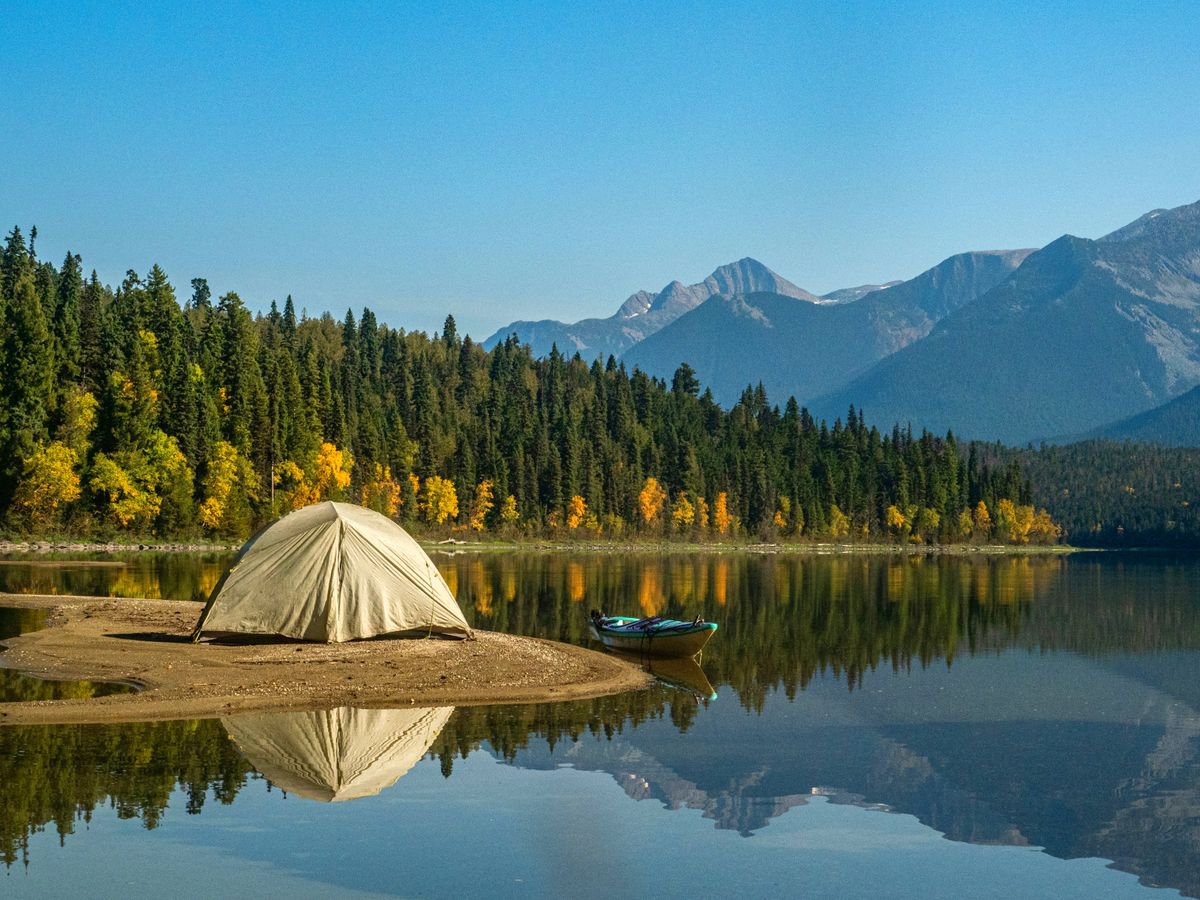
📷 Photo of Sandy Lake, BC courtesy of Lesly Derksen
Other related articles
UNABLE TO RESERVE A CAMPSITE?
Get notified when a sold-out campground has availability
Tell us when, where, and how long you want to camp for. We’ll notify you (via SMS) when a suitable spot opens up at that campground—so you can nab that sold-out campsite reservation!


